Reduced electricity bills; lower carbon emissions; no running costs; low maintenance with a 25+ year life expectancy; charge an electric car for free; less dependence on the grid; off-grid battery backup for power cuts; generating fewer air pollutants than fossil fuels such as sulphur dioxide and particulate matter.
Doesn’t work very well in winter or rainy grey weather. Doesn’t work at night. Uses rare earth elements in manufacturing. Not yet 100% recyclable.
Estimated annual production per kWp of solar in Cumbria on a roof at 30 degrees with no shading: South 850kWh, East 722kWh, West 722kWh, North 519kWh.
A 1kW solar system will produce around 850kWh a year, which will save around 1.6 tonnes of CO2 emissions per year.
Approximately 2 years to pay off the embedded energy in the solar panels.
The value of solar comes from the savings you make from not using grid electricity. For every unit (kWh) generated and used, you can save 30p+ on your electricity usage. You can realistically expect to use between 50% and 100% of your electricity generation depending on your property’s electricity usage.
It depends how much electricity you use, the size of your PV system and the price of electricity. Domestic properties usually pay for their systems in 5–8 years.
Solar panels work well on any roof facing South, East or West. Although they perform best facing South, they will still perform at around 86% of a south-facing system when facing due East or West.
Yes. Solar panels wired in series will only work as well as the weakest panel. The negative effects of shading can be reduced by the addition of optimisers.
Generally, a 6-panel Solar PV system would be the smallest we recommend. Area required is approximately 10.8m².
There is not technically a limit to the size of the system. The amount of power you can export is decided by the DNO, who may impose export limitations.
Panels are between 330Wp and 450Wp, so typically between 9 and 12 panels.
Panels vary in size but on average are approximately 1.75m x 1.05m.
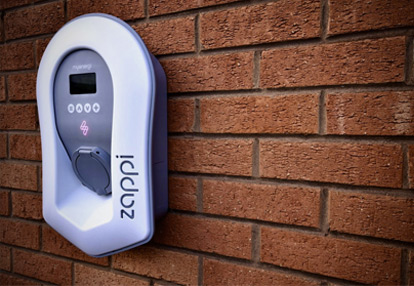
Depending on system size, time of day and time of year, you may be able to fully or partially charge your EV for free using solar energy.
Solar PV generates electricity. Solar Thermal generates domestic hot water.
Yes. Surplus electricity can be redirected to your hot water tank through a hot water divert switch such as an iBoost or Eddi.
No. Solar panels work in all daylight conditions but perform better in brighter sunshine.
Usually a 25-year output guarantee and a 10-year manufacturer warranty.
Solar PV panels will last 25 years+ and come with a 25-year output guarantee. Inverters generally have 5–10 year warranties and batteries typically have a 10-year warranty.
Most domestic solar installations take no more than two days with minimal disruption.
Highly unlikely. Panels are securely attached using roof hook and rail systems or integrated mounting systems.
Normally no. However, listed buildings may require planning permission.
Solar PV usually comes under your household insurance.
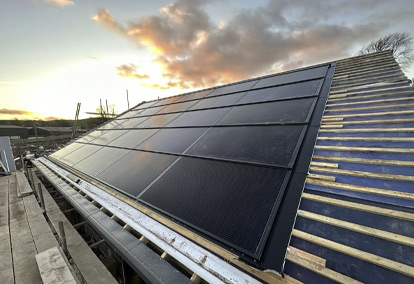
Yes, we can strip the roof and install in-roof solar.
In-roof systems produce slightly less power due to heat build-up, but usually only by a small percentage.
Improved aesthetics and no need for slates or tiles under the array.
The inverter converts DC into AC electricity which is then connected to your distribution board and used within the property.
Not with solar alone. You would require batteries and backup generation to operate fully off-grid.
Not normally. The inverter switches off unless a battery system with emergency backup is installed.
We assess annual electricity usage, roof space and future plans such as EVs, batteries and heat pumps.
Often yes. Future electricity demand tends to increase due to EVs, heat pumps and home working.
Commercial systems can be as low as 3 years depending on electricity use and tariff rates.
Not usually.
There are currently no standard government grants, although local and sector-specific funding opportunities sometimes exist.
Most businesses see immediate reductions in electricity costs.
Most installation work takes place externally and disruption is normally kept to a minimum.
Yes. Commercial solar is an effective way to reduce carbon emissions.
Solar panels can be installed easily in a garden or field using several mounting solutions.
Yes, planning is usually required if it can be seen from public viewpoints.
Large sheds, workshops, grain stores and livestock buildings are often ideal.
Yes, including refrigeration, irrigation, grain drying and workshop equipment.
In many cases, yes.
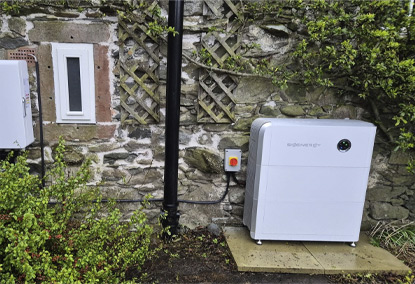
Batteries store surplus electricity generated during the day for use at night or during periods of high demand. They can also be charged on off-peak electricity.
Love Solar generally recommends a battery of at least 8kWh. Batteries can be linked together later to increase capacity.
Approximately 600mm high x 400mm wide x 250mm deep.
Normally on the ground floor, in a garage or in an outbuilding.
Yes.
No, provided an AC-coupled battery is fitted after the generation meter.
AC coupled batteries work alongside a standard string inverter. Hybrid systems replace the string inverter.
Yes, although performance may be slightly reduced during very hot weather.
SolarEdge and optimisers minimise the effects of shading. Optimisers are mounted behind the panels and can improve performance where shading exists.
An 8kWh battery, inverter and installation typically costs £5,500–£6,000.
The Feed-in Tariff ended in April 2019.
Yes. You can be paid for electricity exported to the grid.
Rates vary by electricity supplier. Historically around 5p per unit, though suppliers set their own rates.
Yes, if required by your export payment arrangement.
Yes, to claim export payments.
It depends on battery size and household demand.
Yes, when used with off-peak tariffs.
In many cases, yes, as it can simplify future upgrades.
Ground-mounted solar can be installed using a variety of mounting systems.
Usually yes.
It can be because the array can be positioned at the optimum angle and orientation.
Yes, subject to survey and ground conditions.
Ground screws, driven piles or concrete foundations depending on the site.
Solar panels are generally self-cleaning if positioned at more than 15 degrees. Annual visual inspections are recommended.
Most modern systems include online monitoring via a smartphone app.
Depending on system size, time of day and time of year, you may be able to fully or partially charge your EV for free using solar energy.
Not yet, but the technology is developing.